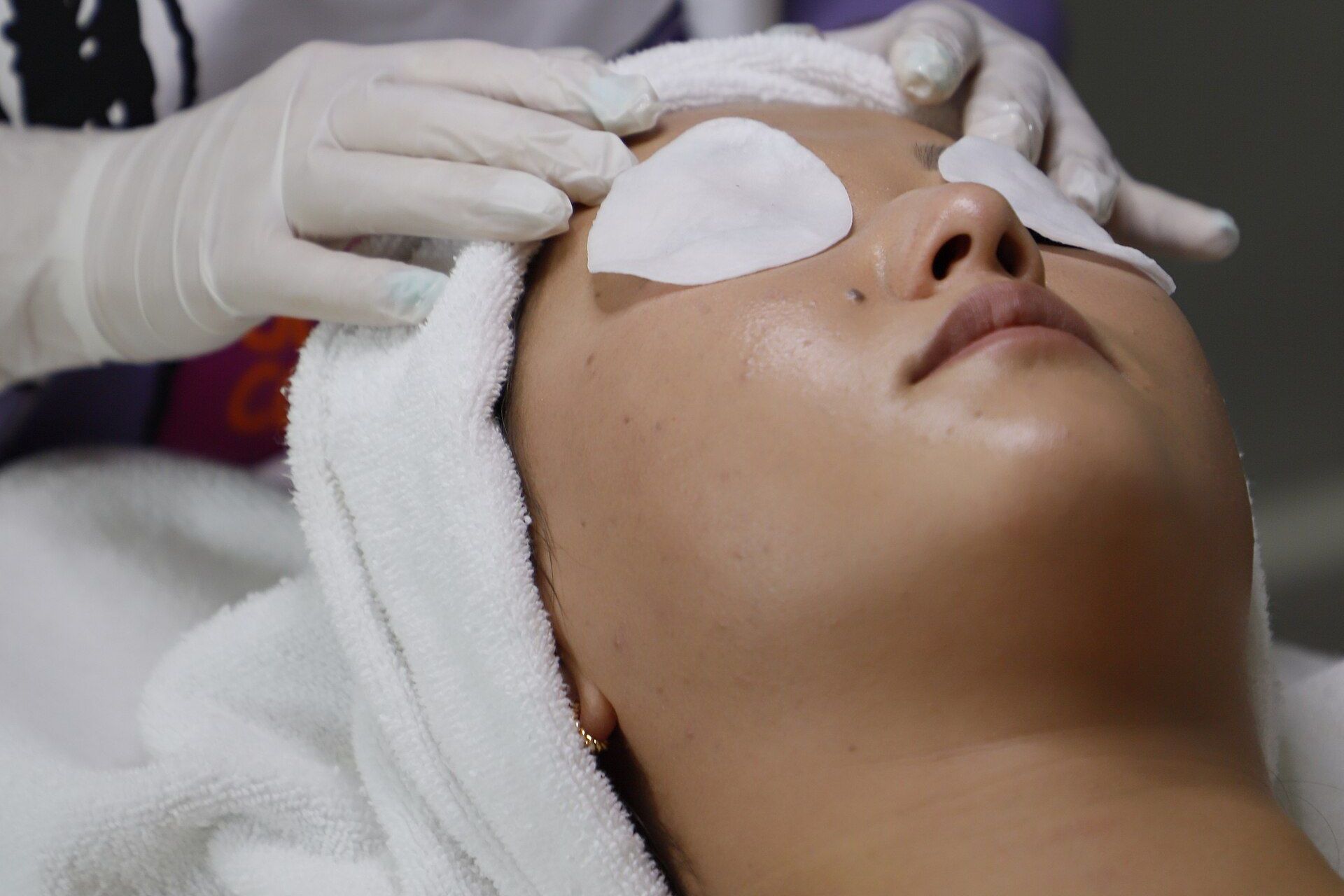
Profhilo is a branded injectable made of hyaluronic acid. Instead of being used to add shape or volume like a typical filler, it is injected in small amounts at set points on the face so that it spreads through the skin, with the aim of improving hydration and skin quality. It is usually given as two sessions about a month apart. The main studies are small, uncontrolled and funded by the company that distributes it, so results vary and should not be taken as guaranteed. This page is information only, not a recommendation.
What is Profhilo?
According to a study that describes the product in detail, each syringe contains 32 mg of high molecular weight hyaluronic acid and 32 mg of low molecular weight hyaluronic acid in 2 ml of salt solution (Sparavigna et al, Clin Cosmet Investig Dermatol 2016). The two sizes of hyaluronic acid are combined into what the makers call “hybrid cooperative complexes”.
In Profhilo, hyaluronic acid is injected into the deeper layer of the skin rather than applied to the surface as in creams and serums.
What is a skin booster?
“Skin booster” is a term clinics use for injectables aimed at skin quality, such as hydration, texture and fine lines, rather than at changing shape. We could not find an official medical definition of the term. Products sold as skin boosters include hyaluronic acid products such as Profhilo, and polynucleotides, which work in a different way. Because the label covers very different products, ask exactly which product a clinic plans to use and why.
How Profhilo differs from filler
Traditional hyaluronic acid fillers are used to “soften facial lines and furrows”, to add volume and to redefine areas such as the lip border, according to the dermatology reference site DermNet. DermNet says filler results usually last three to nine months.
Profhilo is also hyaluronic acid, but it is placed differently. In the main published study, it was injected into the deep dermis as small 0.2 ml amounts at five points on each side of the face, around the cheekbone, jaw and lower face (Sparavigna et al, 2016). The goal is spread and hydration rather than sculpting. It is not designed to fill a deep hollow or lift sagging skin.
How many sessions?
The published protocol used two treatments four weeks apart (Sparavigna et al, 2016). Clinic price lists also sell packages of two or three. For example, sk:n lists single sessions and a course of three (sk:n price list). There is no strong evidence that a particular number of sessions gives a better result.
Profhilo Structura is a related product. A 2024 pilot study gave 50 people two injections a month apart into the fat layer of the outer cheek and assessed them three months later. Ratings of volume loss and wrinkles improved, and no serious side effects were reported. Several authors were linked to the manufacturer and there was no comparison group (Sparavigna et al, Health Sci Rep 2024).
What the evidence shows
- The main face study: 64 women aged 38 to 60, treated twice four weeks apart, followed for 16 weeks. Measures of skin quality improved from week 4 or 8 and were still improved at week 16. The authors named the lack of a control group as the study’s main limitation, and the study was supported by IBSA, the company that distributes Profhilo (Sparavigna et al, 2016).
- Laboratory work: a 2016 study in cells reported increases in collagen-related markers. The journal later published an expression of concern about this paper (Stellavato et al, PLoS One 2016).
- Acne scars: in a small split-face trial of 12 adults, adding Profhilo to a scar procedure made no significant difference to overall scar reduction (Dastgheib et al, J Cosmet Dermatol 2024).
We did not find a large, independent, controlled trial. The fairest summary is that Profhilo may improve skin quality for some people for a few months, based on small company-supported studies.
Risks and side effects
In the 64-woman study, 23% had minor, temporary reactions at injection sites. Nine people (14%) had light bruising and five (7.8%) had light swelling, which cleared within three to ten days.
A review of worldwide reports sent to the company between February 2015 and February 2018 logged 12 adverse event reports, none considered serious. The most common were early swelling and redness at injection sites (Cassuto et al, Biomed Res Int 2020). Reports sent in voluntarily always undercount problems, and several authors were linked to the company, so this is not proof of safety.
Hyaluronic acid injections in general can rarely cause serious problems. DermNet notes rare reports of blindness, stroke and skin death from fillers that block a blood vessel, and explains that hyaluronic acid can be dissolved with an enzyme called hyaluronidase in an emergency (DermNet). Those reports relate to fillers generally, not specifically to Profhilo, but they are a reason to choose a medically trained injector who can manage complications.
Seek urgent medical help for sudden pain, skin colour change or any change in vision after an injection. For a non-urgent new or changing skin problem, speak to a GP or a pharmacist.
Who can give Profhilo in the UK?
England currently has no licensing scheme for skin booster injections, and skin boosters are not named in the government’s October 2026 proposals for restricting higher-risk procedures. Our regulation guide explains what is changing in England, Scotland and Wales.
The NHS advises checking practitioners on the relevant register: GMC for doctors, NMC for nurses, GDC for dental professionals, or a register accredited by the Professional Standards Authority such as the JCCP or Save Face (NHS). See our guide to choosing a skin clinic for questions to ask.
Profhilo cost in the UK
Full prices for the face, checked 21/11/2026:
- CoLaz (clinics in London, the Thames Valley and Derby): from £225 (CoLaz 2026 price guide).
- sk:n (national chain): £300 with a nurse or £375 with a doctor for one session; £845 or £1,020 for three (sk:n price list).
- Cosmetic Skin Clinic, London: from £550 per session; Profhilo Structura from £550 (Cosmetic Skin Clinic price list).
That is roughly £225 to £550 per session, and the two-session protocol doubles it. Black Friday offers were ignored. Our price guide covers other treatments.
Profhilo vs polynucleotides
| Profhilo | Polynucleotides | |
|---|---|---|
| What it is | Two sizes of hyaluronic acid | Purified DNA fragments, usually from fish |
| Usual course in studies | Two sessions, four weeks apart | Often three sessions, two to three weeks apart |
| Evidence | Small, mostly company-supported studies | Small studies; reviews call it low to moderate quality |
| Single session at clinics we checked | £225 to £550 | £275 to £475 |
Neither has strong long-term evidence. The choice is less about which product is “better” and more about whether either is right for your concern, which a registered practitioner should explain without pressure. Our polynucleotides guide covers that product in detail.
Darker and melanin-rich skin
We found no Profhilo study that focused on darker skin types, and the main face study did not report results by skin type. That is a gap, not evidence of harm.
What is known is that darker skin is more prone to dark marks after any skin inflammation or injury, known as post-inflammatory hyperpigmentation (BAD skin of colour). Injection bruising usually settles, but it is sensible to ask how the practitioner would handle any lasting marks. If your main concern is uneven tone or dark patches rather than dryness or fine lines, a skin booster may not address it at all; see our guide to hyperpigmentation treatment.
Questions people ask
How long does Profhilo last?
In the main study, improvement was still measurable 16 weeks after the first treatment, which was three months after the second. We found no good evidence on how long effects last beyond that.
What should I expect after one week?
Bruising and swelling at injection points are the most likely effects; in the main study they cleared within three to ten days. Any visible change in skin quality, if it happens, tends to be gradual.
Is Profhilo worth it?
That is a personal judgement. The evidence is limited and the treatment costs several hundred pounds per session. Get a clear explanation of what it can and cannot do for your skin, and take time to decide.
What does “Profhilo gone wrong” usually mean?
Most reported problems are swelling, redness, bruising or small bumps at injection points. Serious complications from hyaluronic acid injections are rare, but they are the reason to choose a trained, registered injector.
General information from the sources linked on this page, not medical advice. Results vary from person to person. For a new or changing skin problem, see your GP or a pharmacist first.
